
 Save
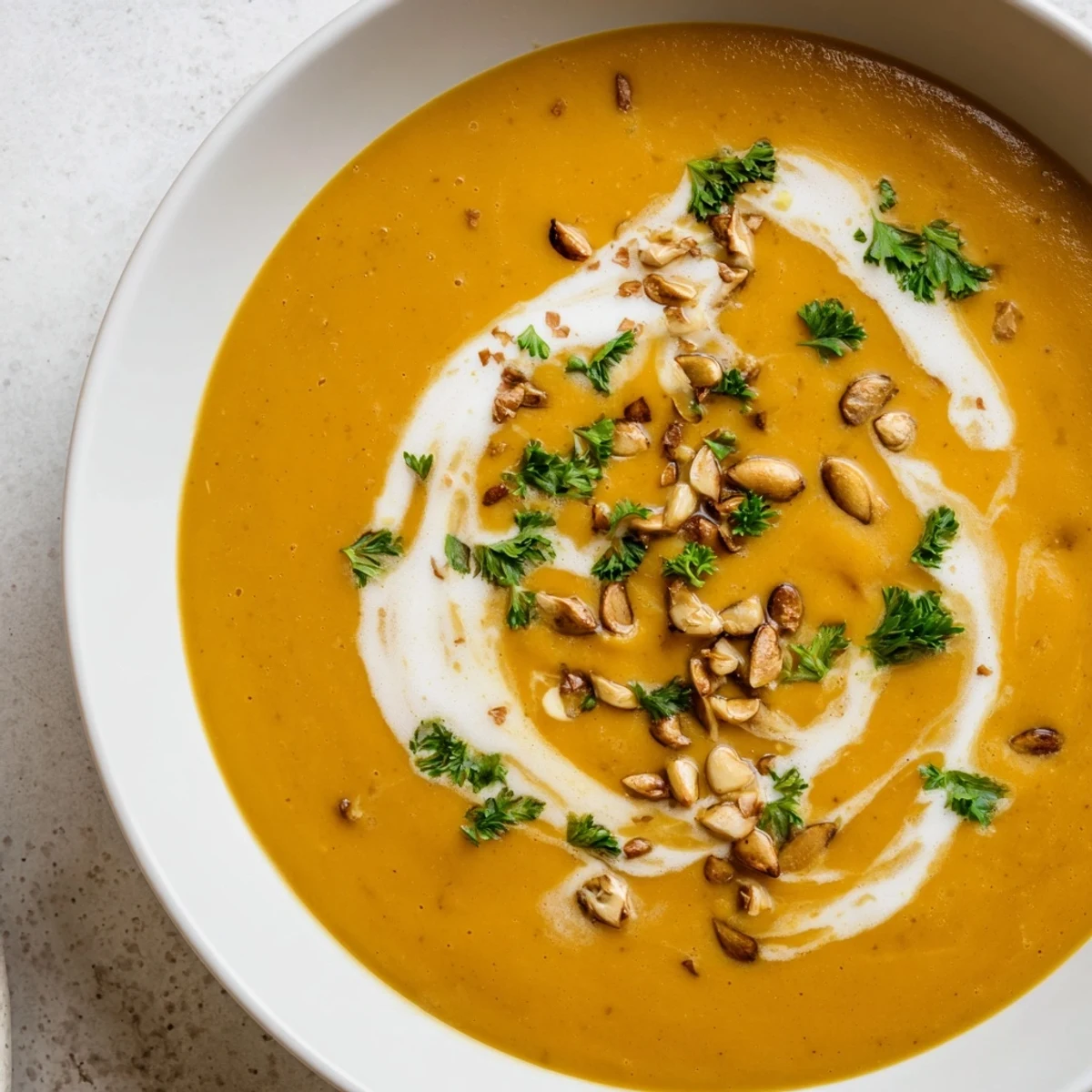
Save This comforting dish blends sweet roasted butternut squash with sautéed onions, carrots, and garlic, simmered in vegetable broth and seasoned with cinnamon, nutmeg, and pepper. After roasting the squash until caramelized, it’s pureed into a velvety texture, enriched optionally with coconut milk or cream. Garnished with pumpkin seeds and fresh parsley, it offers warming flavors perfect for chilly days.
There's something about the smell of butternut squash roasting in the oven that makes a kitchen feel like home, even if you've never been there before. I discovered this soup on a gray October afternoon when I was trying to use up vegetables from a farmer's market haul, and I honestly didn't expect much—just another weeknight dinner. But then something magical happened: the squash turned golden and sweet, the spices filled the air, and by the time I blended it all together, I had created something that tasted like autumn in a bowl.
I made this for my partner on a night when everything felt a little off, and they came home to the kitchen smelling incredible. They sat at the counter with a bowl of this soup while I finished up other things, and something about that simple moment—the warmth, the comfort, the way they closed their eyes on the first spoonful—made me realize this recipe was a keeper.
Ingredients
- Butternut squash (1 medium, about 2 lbs): This is the star, and roasting it is non-negotiable—it concentrates all the natural sweetness and creates those caramelized edges that make the soup taste like it took forever.
- Yellow onion (1 large): The aromatics are your foundation, and onion sweetens as it cooks, balancing the spices perfectly.
- Carrots (2 medium): They add earthiness and a subtle natural sweetness that rounds out the flavor.
- Garlic (2 cloves): Just enough to add depth without overpowering the delicate squash flavor.
- Olive oil (2 tbsp): Use good quality if you have it—it carries flavor through the whole soup.
- Cinnamon (1/2 tsp): The secret weapon that makes people say, 'What is that spice I'm tasting?'
- Nutmeg (1/4 tsp): Warm and subtle, it whispers rather than shouts.
- Black pepper (1/4 tsp): Just a gentle finish to avoid any flatness.
- Salt (1 tsp): Taste as you go—you may need more depending on your broth.
- Vegetable broth (4 cups): Low-sodium is the move so you control the salt level completely.
- Coconut milk or heavy cream (1/2 cup, optional): This makes it restaurant-worthy creamy, but the soup is already luxurious without it.
- Pumpkin seeds and fresh parsley (for garnish): These add texture and brightness that lift the whole dish.
Instructions
- Get your oven ready:
- Preheat to 400°F and line a baking sheet with parchment paper—this prevents sticking and makes cleanup infinitely easier.
- Season the squash:
- Toss your cubed squash with 1 tablespoon olive oil, half the salt, cinnamon, and nutmeg in a bowl, making sure every piece is coated. The spices will caramelize right into the flesh as it roasts.
- Roast until golden:
- Spread the squash in a single layer on your baking sheet and roast for 25–30 minutes, stirring once halfway through. You're looking for soft, slightly browned edges that smell absolutely incredible.
- Sauté your aromatics:
- While the squash roasts, heat the remaining tablespoon of olive oil in a large pot over medium heat. Add your chopped onion and carrots, and let them soften for 5–7 minutes, stirring occasionally until they're translucent and starting to caramelize slightly at the edges.
- Add the garlic:
- Once the onions and carrots are soft, add your minced garlic and cook for just 1 minute—you want it fragrant but not burned, which would make it bitter.
- Combine and simmer:
- Add the roasted squash to the pot along with the vegetable broth, remaining salt, and black pepper. Bring everything to a gentle boil, then reduce the heat and let it simmer quietly for 10 minutes so the flavors can meld together.
- Blend until silky:
- Remove from heat and carefully puree the soup using a blender (work in batches if needed) or an immersion blender until it's completely smooth with no lumps. Take your time here—a truly velvety texture is what makes this special.
- Finish with creaminess:
- Stir in the coconut milk or heavy cream if you're using it, then taste and adjust the seasoning. Sometimes you'll need a pinch more salt or a crack of pepper.
- Serve with style:
- Reheat gently if needed, then ladle into bowls and top with a scattering of pumpkin seeds, fresh parsley, and a final swirl of cream. The warmth of the soup will release the fragrance of the spices one last time.
 Save
Save The first time I served this to guests, I almost didn't tell them it was vegetarian because I wasn't sure they'd believe me—the richness and depth felt like it had to have some hidden meat. That moment of them realizing it was just vegetables, spices, and technique made me understand that the best cooking isn't about complexity, it's about respecting your ingredients enough to let them shine.
The Magic of Roasting
Roasting butternut squash transforms it completely—the dry heat of the oven caramelizes the natural sugars, creating sweetness that you simply can't achieve by simmering it in liquid. The squash develops these beautiful golden-brown edges that taste almost nutty, and when you blend it all together, that flavor becomes the entire foundation of the soup. I learned this the hard way by trying to make the soup the quick way once, and it was pale, wan, and tasted nothing like the real thing. Now I'm religious about roasting.
Playing with the Spice Profile
Cinnamon and nutmeg are the classic pairing, but they're not mandatory—this soup is forgiving enough to adapt to what you love. Some people add a tiny pinch of cayenne pepper for a whisper of heat, which is lovely if you like things with a little edge. I've also seen ginger work beautifully here, and a light touch of cloves if you want to push toward more of a dessert-like sweetness. The key is respecting the squash enough not to bury it with too many competing flavors.
Serving Suggestions and Variations
This soup pairs beautifully with crusty bread for soaking up every last spoonful, or you can serve it alongside a sharp green salad to cut through the richness. Some people stir in a handful of cooked wild rice or farro to make it more of a main course, and I've even seen it served chilled in summer as a different kind of comfort. The garnishes matter too—pumpkin seeds add a satisfying crunch, fresh parsley brings brightness, and that final swirl of cream makes it feel like a restaurant dish.
- Try it with crispy sage leaves fried in butter for an unexpected depth.
- A sprinkle of toasted coconut flakes adds tropical sweetness that works surprisingly well.
- If you make a double batch, it freezes beautifully for up to three months.
 Save
Save This soup has become my answer to almost everything—a bad day, a rainy afternoon, when someone needs comfort, when I want to feel like I've accomplished something in the kitchen. It's the kind of recipe that reminds you that good food doesn't have to be complicated, just thoughtful.
Recipe FAQs
- → How do I properly roast butternut squash for best flavor?
-
Peel, seed, and cube the squash, toss with olive oil and spices, then roast at 400°F for 25–30 minutes until tender and caramelized for a sweet, rich taste.
- → Can I make this dish vegan-friendly?
-
Yes, use vegetable broth and coconut milk instead of cream to keep it plant-based and creamy.
- → What spices enhance the flavor of roasted butternut squash?
-
Cinnamon and nutmeg add warmth and subtle sweetness, while a pinch of black pepper balances the flavors.
- → Is it necessary to puree the mixture for a smooth texture?
-
Pureeing creates the velvety consistency characteristic of this dish, but you can leave it chunky if preferred.
- → What garnishes complement this preparation best?
-
Pumpkin seeds add crunch while chopped fresh parsley provides freshness; a drizzle of coconut milk or cream adds extra richness.