
 Save
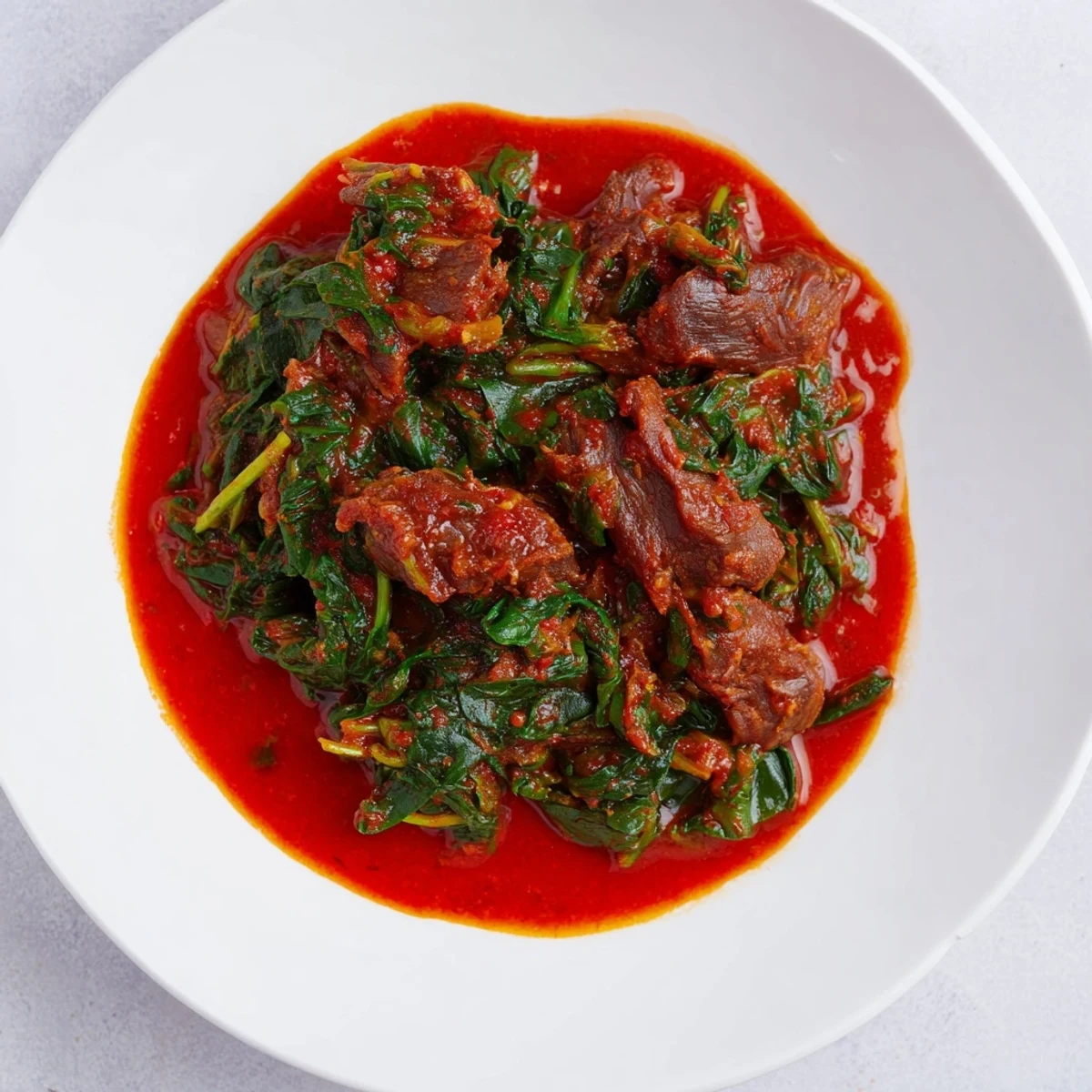
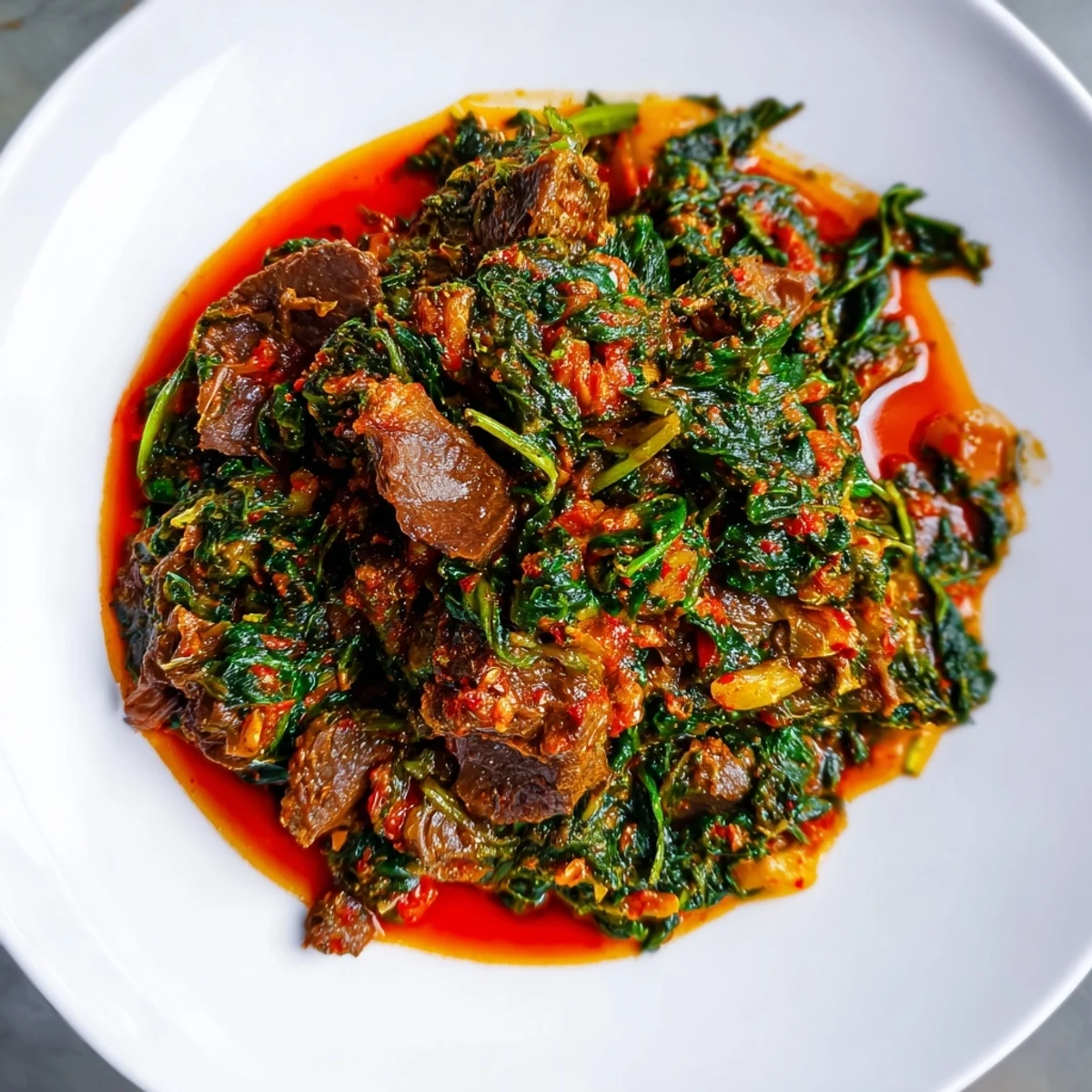
Save This hearty West African dish combines tender beef chunks with fresh spinach in a deeply aromatic tomato and pepper sauce. The stew gets its distinctive flavor from a blend of red bell peppers, scotch bonnets, and authentic seasonings like ground crayfish and dried shrimp. Palm oil adds rich color and traditional taste, while the slow-simmered base allows spices to meld perfectly. The result is a thick, vibrant stew that's both satisfying and full of bold African flavors.
The scent of palm oil hitting a hot pan takes me straight to my aunt's kitchen in Lagos, where the air would grow thick with the aroma of frying peppers and onions. She taught me that Efo Riro isn't just a stew—it's a conversation between ingredients that need time to really get to know each other. Now every time I make it, I find myself slowing down, letting those layers build until the kitchen smells like home.
Last winter, I made a massive pot for friends who'd never tried Nigerian cuisine before. Watching them tentatively take that first bite, then immediately reach for seconds as their eyes lit up—that's the kind of dinner table victory that makes cooking worth every minute. One friend actually asked if I could teach them how to make it, which might be the highest compliment I've ever received.
Ingredients
- Beef stew meat (500 g): Chuck or stew beef becomes meltingly tender after its initial simmer—dont rush this step
- Fresh spinach (500 g): The fresh stuff wilts beautifully, though frozen works in a pinch if you drain it really well
- Red bell peppers (2): These bring sweetness that balances the heat from the scotch bonnets
- Scotch bonnet peppers (2): The soul of the dish—remove seeds if you're heat-sensitive, but don't skip them entirely
- Palm oil (1/4 cup): That distinct red hue and earthy flavor—vegetable oil works but you'll lose something special
- Ground crayfish (1 tablespoon): Optional, yes, but it adds this incredible umami layer that makes people ask what's your secret
- Bouillon cubes (2): Maggi or Knorr brands give that authentic Nigerian depth
Instructions
- Start with the beef:
- Season your beef pieces with salt and pepper, then pop them in a large pot with half the chopped onion and enough water to cover everything
- Simmer until tender:
- Bring to a boil, then reduce heat and let it simmer gently for about 20 minutes until the meat is fork-tender
- Save that liquid gold:
- Drain the beef but hang onto that stock—it's going back into the stew later and you'll want every drop of that flavor
- Blend your pepper base:
- While beef simmers, whirl together those red bell peppers, tomatoes, scotch bonnets, and remaining onion until smooth
- Heat the palm oil:
- Warm your oil in a large saucepan over medium heat—you want it hot but not smoking
- Build the foundation:
- Sauté garlic for just 30 seconds, then pour in that blended pepper mixture and cook for 10-12 minutes
- Wait for the magic:
- You'll know it's ready when the oil floats to the top—that's when the pepper base has really developed its character
- Bring it together:
- Stir in your cooked beef, a cup of that reserved stock, and all those spices—let everything meld for 8-10 minutes
- Add the greens:
- Fold in the spinach and cook just 3-5 minutes until wilted—the stew should be thick and rich now
- Taste and adjust:
- Add more salt or pepper if needed, then serve it up with whatever sides make your heart happy
 Save
Save There was this rainy Sunday when I made Efo Riro and ended up eating it straight from the pot while standing at the stove, too impatient to even bother with a proper bowl. The steam was fogging up my glasses, the stew was perfect, and I just thought—some meals are worth getting messy for.
Getting the Heat Right
Scotch bonnets pack serious punch, and I've learned the hard way that handling them with bare hands is a mistake you only make once. Use gloves or hold them with a fork while seeding—your future self will thank you when you're not crying over your cutting board hours later.
Building Layers of Flavor
The crayfish and dried shrimp might seem optional, but they're what transforms this from good to unforgettable. If you can't find them ground, whole dried shrimp work too—just toast them briefly in a dry pan and crush them with a mortar and pestle or the back of a spoon.
Making It Your Own
The beauty of Efo Riro is how adaptable it is once you understand the basics. I've added smoked fish before, thrown in some pumpkin leaves alongside the spinach, even made it completely vegetarian with mushrooms standing in for beef.
- Try adding some locust beans (iru) if you can find them at an African market
- A splash of coconut milk in the final minutes adds incredible richness
- Leftovers freeze beautifully for those nights when cooking feels impossible
 Save
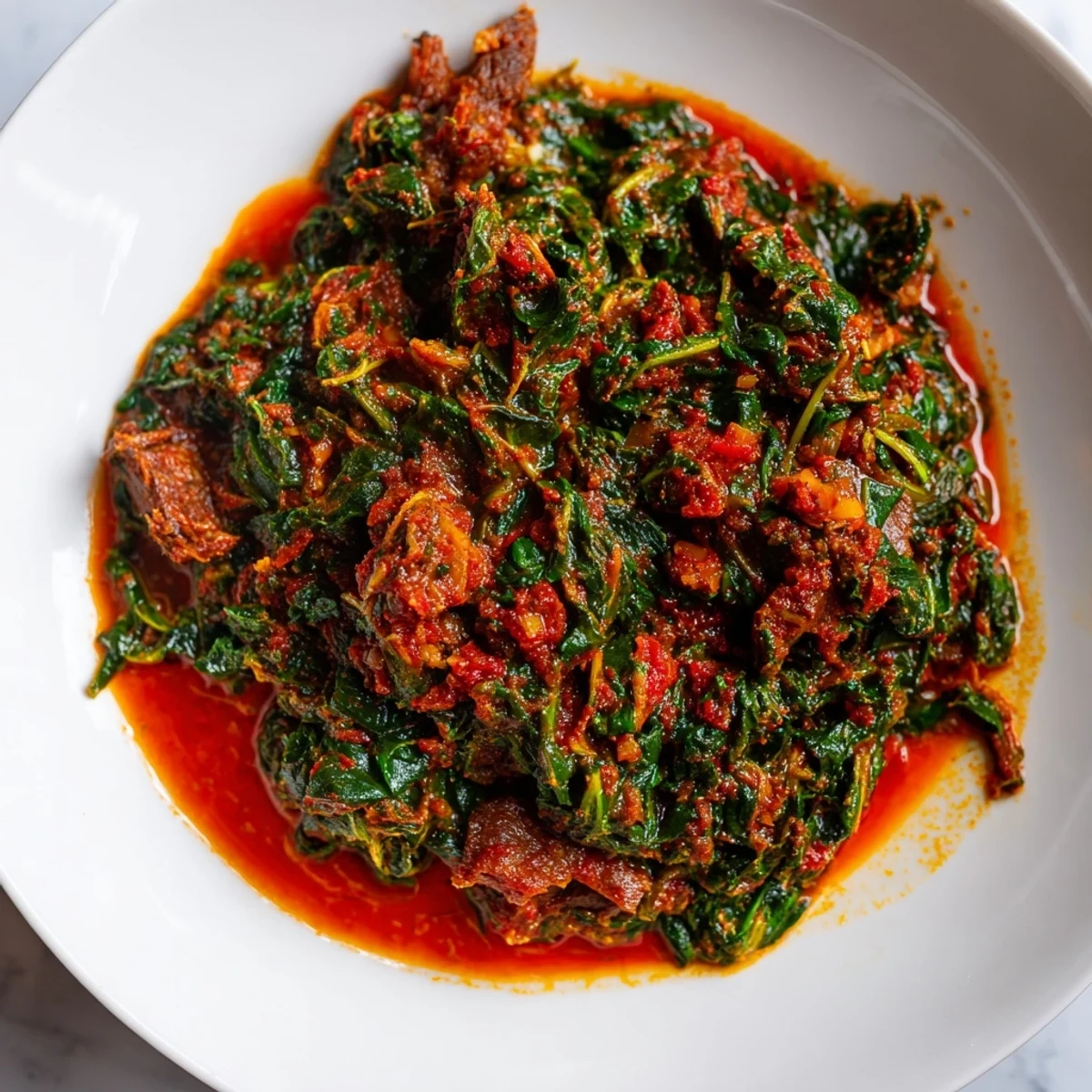
Save Whether it's a weeknight dinner or a special gathering, this stew has a way of making everything feel a little more celebratory. Grab a spoon and dig in—there's always enough to go around.
Recipe FAQs
- → What makes Efo Riro authentic?
-
Authentic Efo Riro relies on palm oil for color and richness, ground crayfish or dried shrimp for depth, and scotch bonnet peppers for heat. The traditional slow-cooking method allows the pepper-tomato base to thicken until oil floats to the top.
- → Can I make this less spicy?
-
Absolutely. Reduce or omit the scotch bonnet peppers and lower the cayenne pepper. You can also remove seeds from the peppers to tame the heat while maintaining the flavor profile.
- → What can I substitute for palm oil?
-
Vegetable oil works well as a substitute, though it won't provide the same vibrant red color. Coconut oil can also work, adding a subtle sweetness that complements the dish.
- → How should I serve this stew?
-
Efo Riro pairs beautifully with jollof rice, pounded yam, fufu, boiled plantains, or simply with white rice. The thick sauce coats these sides perfectly, making for a satisfying meal.
- → Can I use frozen spinach?
-
Yes, frozen spinach works well. Thaw and drain it thoroughly before adding to the stew. Use about 350g frozen spinach to replace 500g fresh, as frozen is more compact.
- → How long does this keep?
-
The stew keeps well in the refrigerator for 3-4 days and freezes beautifully for up to 3 months. The flavors often develop and improve after a day in the fridge.