
 Save
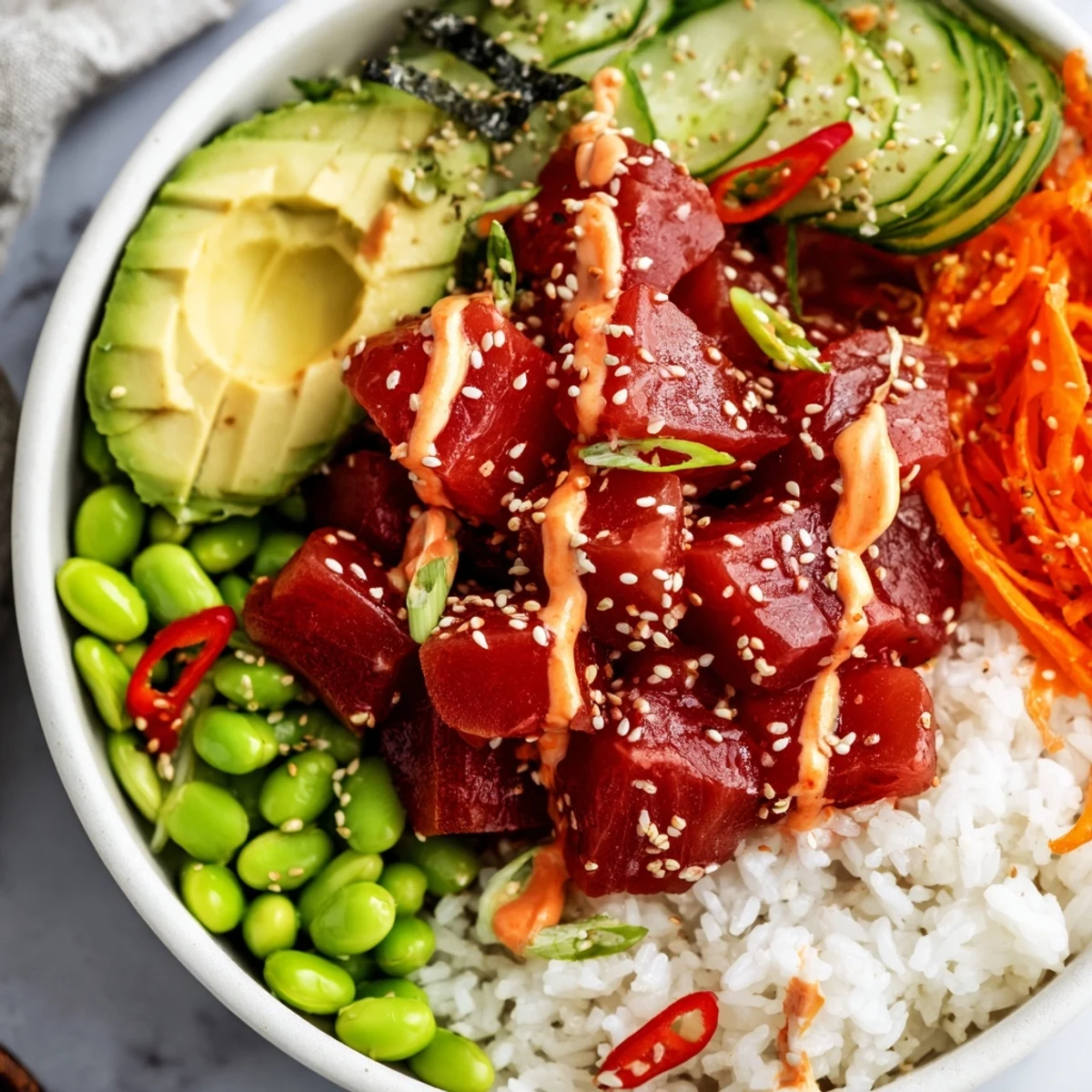
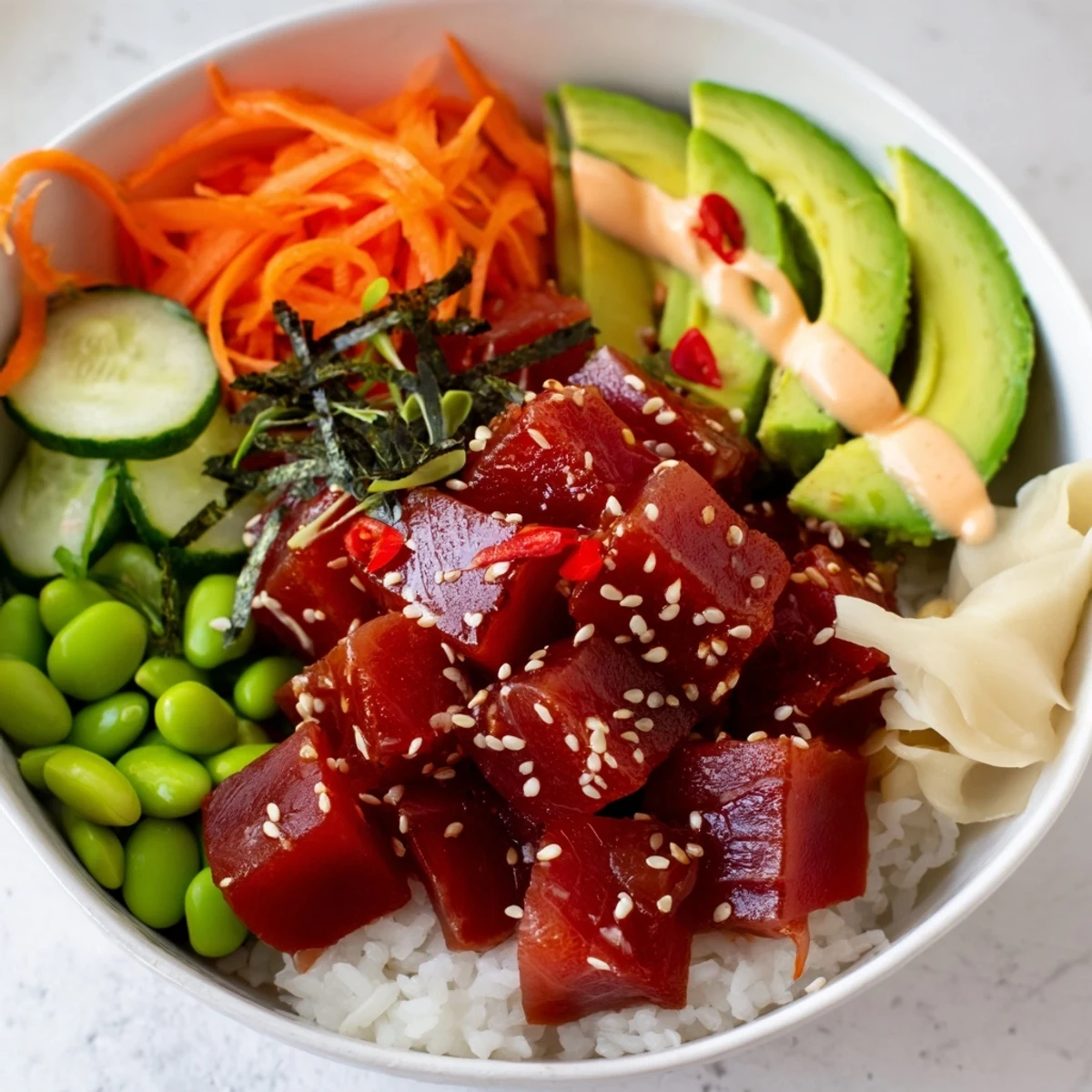
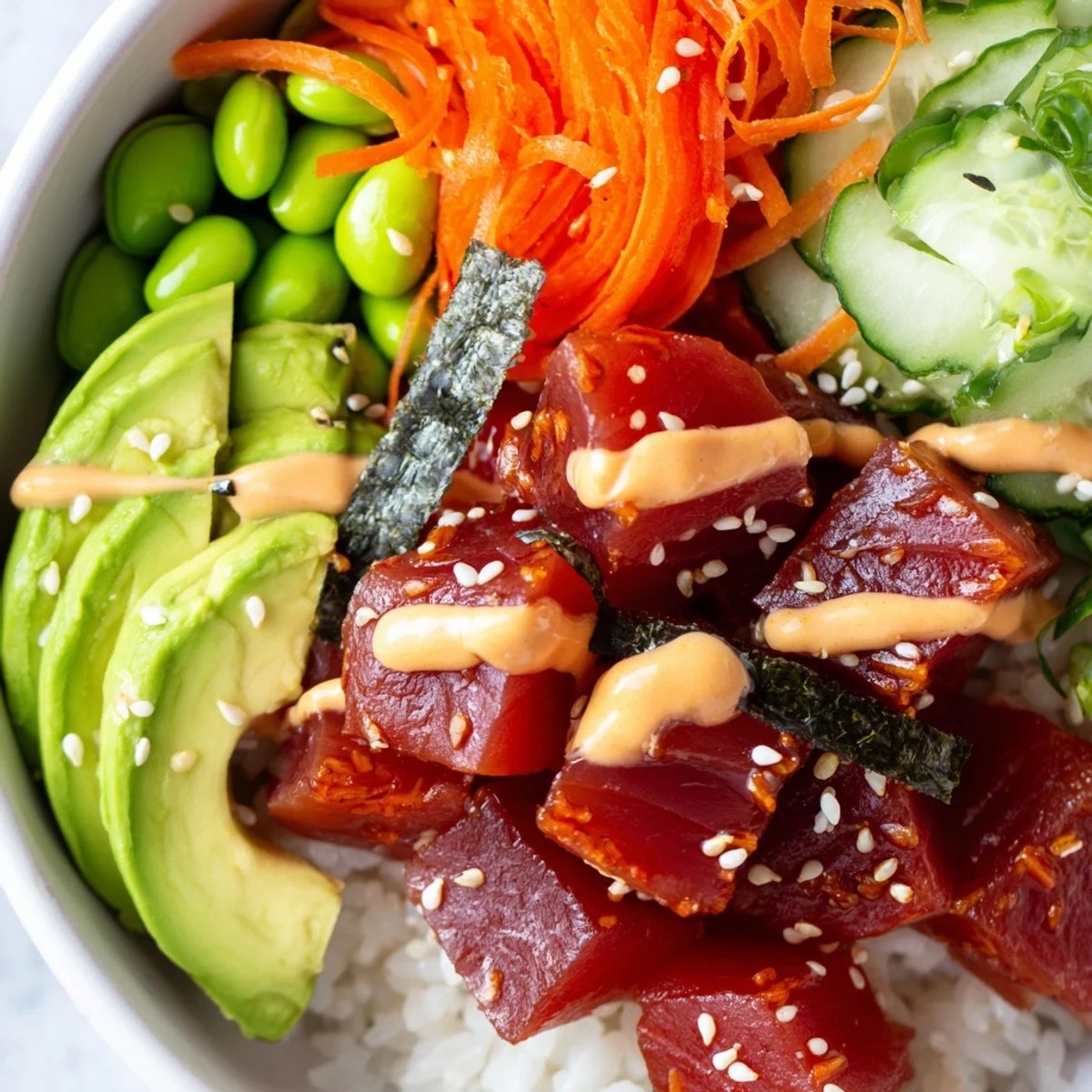
Save This vibrant Hawaiian-inspired bowl combines sushi-grade tuna cubes marinated in a spicy blend of soy sauce, sesame oil, and sriracha. The tuna rests for 10 minutes to absorb flavors while the sushi rice cooks and seasons with vinegar. Each bowl features a base of fluffy rice topped with the marinated tuna, ripe avocado slices, crisp cucumber, shredded carrot, edamame, and nori strips. The spicy kick balances perfectly with creamy avocado and cool vegetables, creating a satisfying meal that comes together in under an hour. Garnish with sesame seeds, pickled ginger, and fresh chili for extra layers of flavor and texture.
The first time I had a proper poke bowl was at a tiny hole-in-the-wall spot in Honolulu where the fish was so fresh it practically melted on my tongue. I came home obsessed with recreating that vibrant balance of spicy, savory, and creamy that makes Hawaiian food so addictive. This recipe is the result of countless attempts to capture that island magic in my own kitchen.
Last summer my sister came over skeptical about raw fish at home, but after one bite she was hovering over the cutting board stealing pieces of marinated tuna. We ended up eating standing up, laughing and building our bowls with way too many toppings. Thats the kind of meal this is, meant to be shared and messy and absolutely delicious.
Ingredients
- Sushi-grade tuna: This is non-negotiable since it will be eaten raw. Ask your fishmonger specifically for sushi-grade and smell it, it should smell like the ocean not fishy.
- Soy sauce: Low sodium gives you control over the saltiness. If you need gluten-free, tamari works perfectly without compromising flavor.
- Sriracha: Adjust based on your heat tolerance. The marinade should have a gentle kick that builds rather than overwhelms.
- Kewpie mayonnaise: This Japanese mayo is richer and creamier than American brands. If you cannot find it, regular mayonnaise with a splash of rice vinegar makes a decent substitute.
- Sushi rice: Short-grain rice becomes sticky and clingy when cooked, which is exactly what you want to anchor all those beautiful toppings.
- Rice vinegar: This seasons the rice while adding a subtle sweetness that balances the spicy tuna.
- Avocados: They should yield slightly to pressure but not feel mushy. Too firm and they will not blend with the other textures.
- Sesame oil: Toasted sesame oil adds a deep, nutty aroma that makes the marinade taste complex and restaurant-quality.
Instructions
- Cook the rice to perfection:
- Rinse your sushi rice until the water runs clear, this removes excess starch for fluffy separate grains. Simmer with water for 15 minutes then let it steam covered for another 10 minutes, do not peek or you will release the steam.
- Season while warm:
- Fold the vinegar mixture into the hot rice gently, you want each grain glossy but not mushy. Spread it on a baking sheet to speed cooling while you prep the toppings.
- Whisk up the magic sauce:
- Combine soy sauce, sesame oil, sriracha, mayonnaise, rice vinegar, and honey until smooth. The sauce should coat the back of a spoon and taste like a perfect balance of salty, spicy, and slightly sweet.
- Marinate the tuna:
- Toss the cubed fish in the sauce gently so you do not break up those beautiful pieces. Let it sit for at least 10 minutes in the fridge, anything longer than 30 minutes and the texture starts to change.
- Prep your rainbow of toppings:
- Slice avocados, cucumber, carrots, and whatever else calls to you from the crisper drawer. Thin, uniform slices make each bite feel elegant and thoughtful.
- Build your masterpiece:
- Start with a base of warm seasoned rice then arrange the tuna and toppings in sections so you can see all those gorgeous colors. Finish with sesame seeds, nori strips, and anything else that makes you happy.
 Save
Save This recipe has become my go-to for summer dinner parties because it looks impressive but secretly comes together in under an hour. Guests love building their own bowls and the conversation always turns to who can handle the most spice.
Make It Your Way
Swap salmon for the tuna if raw fish feels too adventurous, it is equally delicious with the same spicy marinade. Or try cooked shrimp if you want something completely different but still satisfying.
Rice Tips That Changed Everything
I used to struggle with gummy rice until I learned to measure by weight instead of volume. Also, letting the rice rest covered after cooking is not optional, it finishes the cooking process and ensures every grain is perfectly tender.
Sauce Secrets
Double the sauce recipe and keep it in a jar in your fridge. It is incredible drizzled over grilled fish, roasted vegetables, or even as a dip for crispy potatoes.
- Make the sauce up to three days ahead
- Leftover poke keeps for one day but the texture will change
- Always keep your knife razor sharp for clean cuts through the fish
 Save
Save There is something deeply satisfying about eating with chopsticks from a bowl packed with contrasting textures and flavors. This is the kind of food that makes you feel nourished and happy and ready for summer.
Recipe FAQs
- → What type of tuna works best?
-
Sushi-grade tuna is essential since it's served raw. Look for deep red, firm flesh with no fishy odor. Ahi or yellowfin tuna are excellent choices from a reputable fishmonger.
- → Can I make this ahead of time?
-
Marinate the tuna up to 4 hours before serving. Prepare rice and toppings in advance, but assemble bowls just before eating to maintain texture and freshness.
- → How spicy is the marinade?
-
The sriracha provides moderate heat. Start with 1 tablespoon and adjust to your preference. You can reduce the amount or substitute with milder hot sauce.
- → What rice alternatives work?
-
Short-grain white rice is traditional, but brown rice, quinoa, or cauliflower rice work well. Adjust cooking times and liquid ratios accordingly.
- → Is this gluten-free?
-
Replace soy sauce with tamari to make it gluten-free. Check all condiment labels, especially the sriracha and nori sheets, for hidden gluten.
- → Can I use cooked fish instead?
-
Seared or grilled tuna, salmon, or cooked shrimp work as alternatives. Marinate briefly after cooking rather than raw, and adjust marinating time to 5 minutes.