
 Save
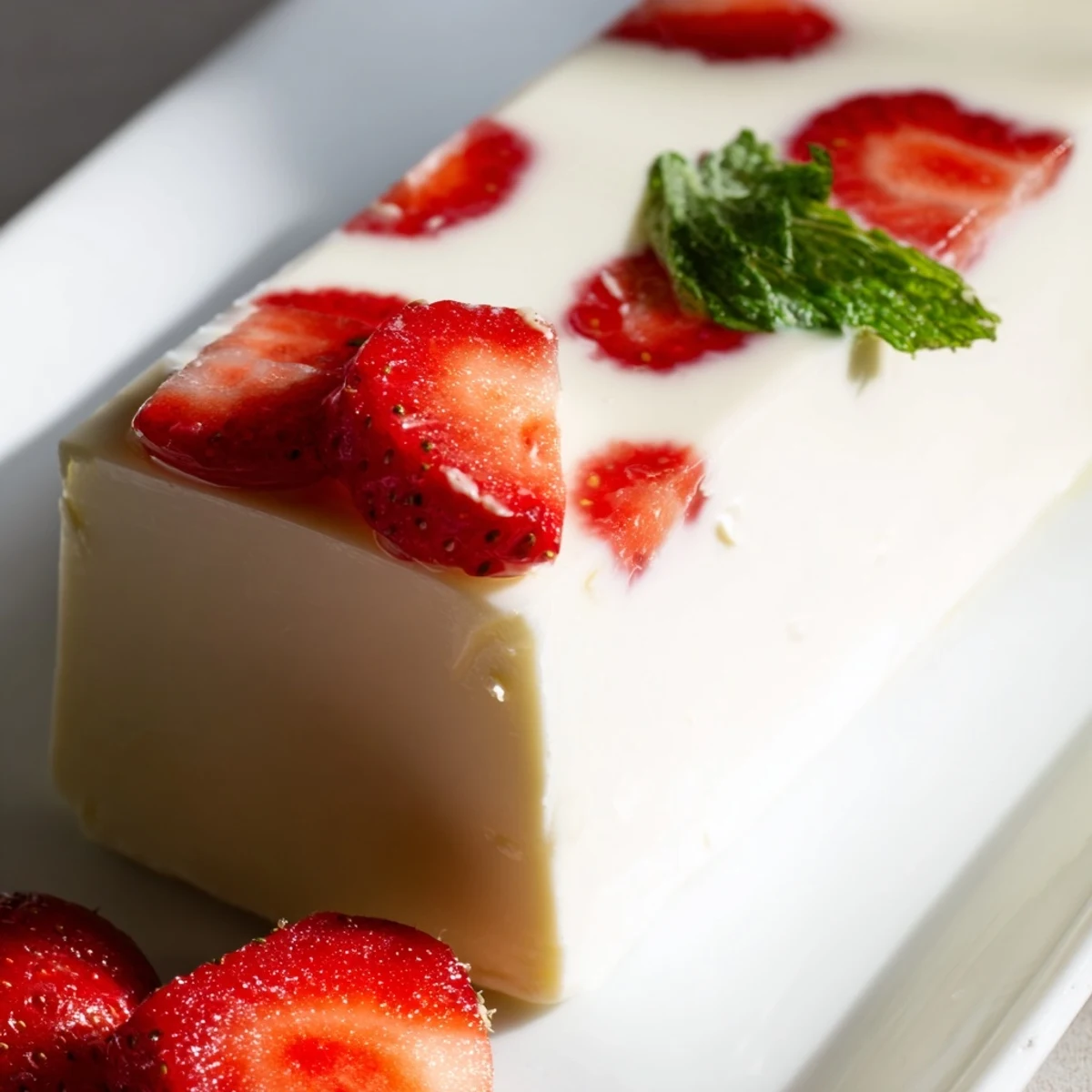
Save This traditional Japanese confection combines smooth, creamy milk jelly with sweet fresh strawberries. The preparation involves dissolving agar-agar in warm milk with sugar, creating a delicate yet firm gel that holds the fruit beautifully. After setting for three hours, the yokan becomes perfectly sliceable, offering a refreshing dessert that balances the natural tartness of strawberries with the gentle sweetness of milk. The texture is silky and light, making it ideal for warm weather serving.
I discovered yokan during a cherry blossom festival in Kyoto, where little paper cups of this milky white jelly were being sold from a street vendor. The wobble was mesmerizing, and when I bit into that first spoonful, the sweetness of the fruit against the gentle creaminess felt like spring itself. I've been making it ever since, adapting the traditional red bean version to whatever fruit is in season. Strawberries and milk became my combination because they remind me of strawberry milk but elevated into something elegant.
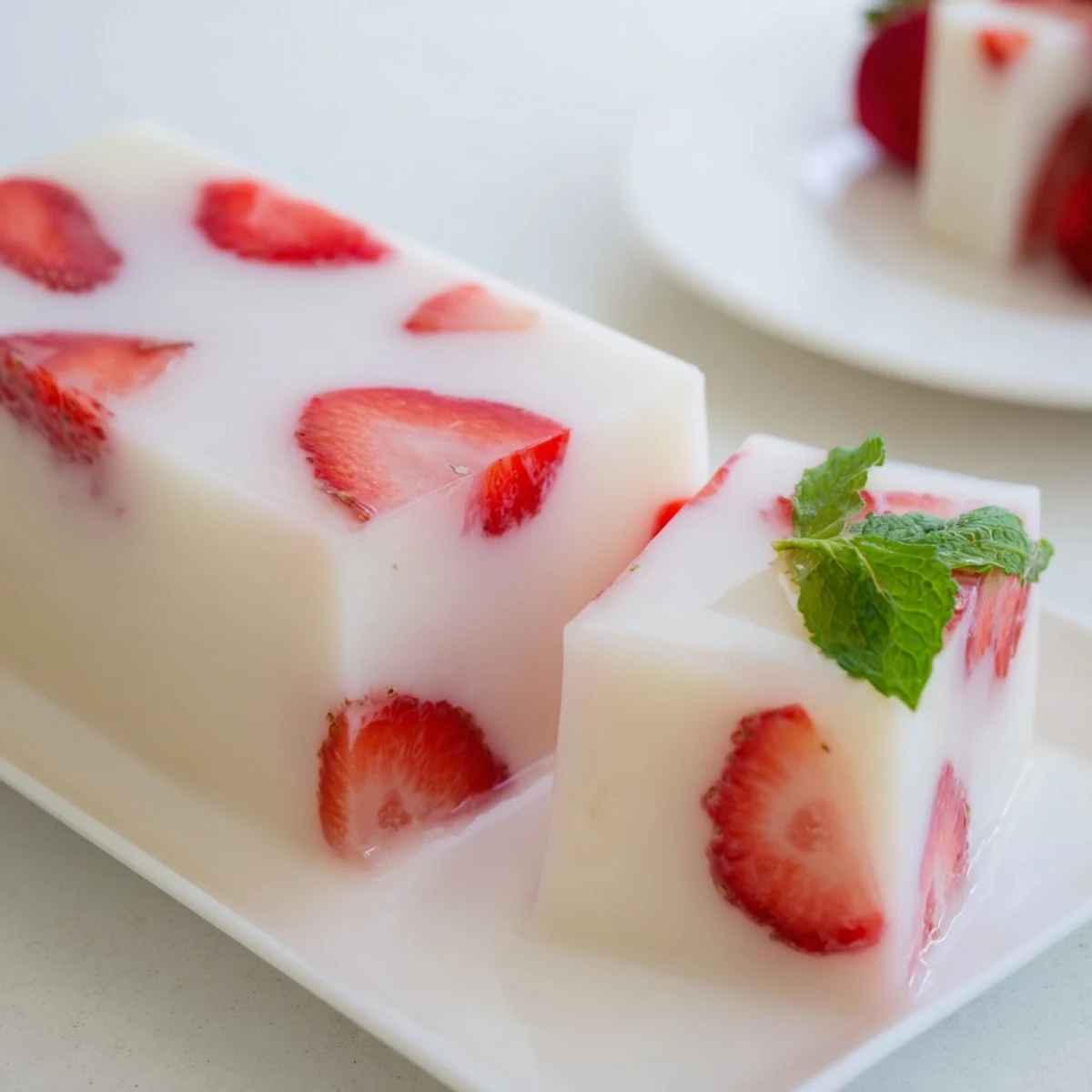
Last summer I made this for a picnic in the park, packing individual portions into small mason jars. My friend Sarah took one bite and immediately asked for the recipe, convinced I'd spent hours on something so delicate. Watching the sun catch the translucence of the jelly, with those ruby strawberries suspended inside, made me realize how beautiful simple food can be. Now it's my go-to when I want to bring something that looks impressive but comes together in minutes.
Ingredients
- Fresh strawberries: Choose berries that are fragrant and slightly firm, as they'll hold their shape better in the jelly
- Whole milk: The richness of whole milk creates a silky mouthfeel that low-fat versions can't quite achieve
- Granulated sugar: This balances the natural tartness of the berries without overwhelming their delicate flavor
- Powdered agar-agar: A sea vegetable based gelling agent that sets firmly but melts cleanly on the tongue
- Vanilla extract: Pure vanilla extract rounds out the dairy notes and adds warmth to the finished dessert
Instructions
- Prepare the strawberries:
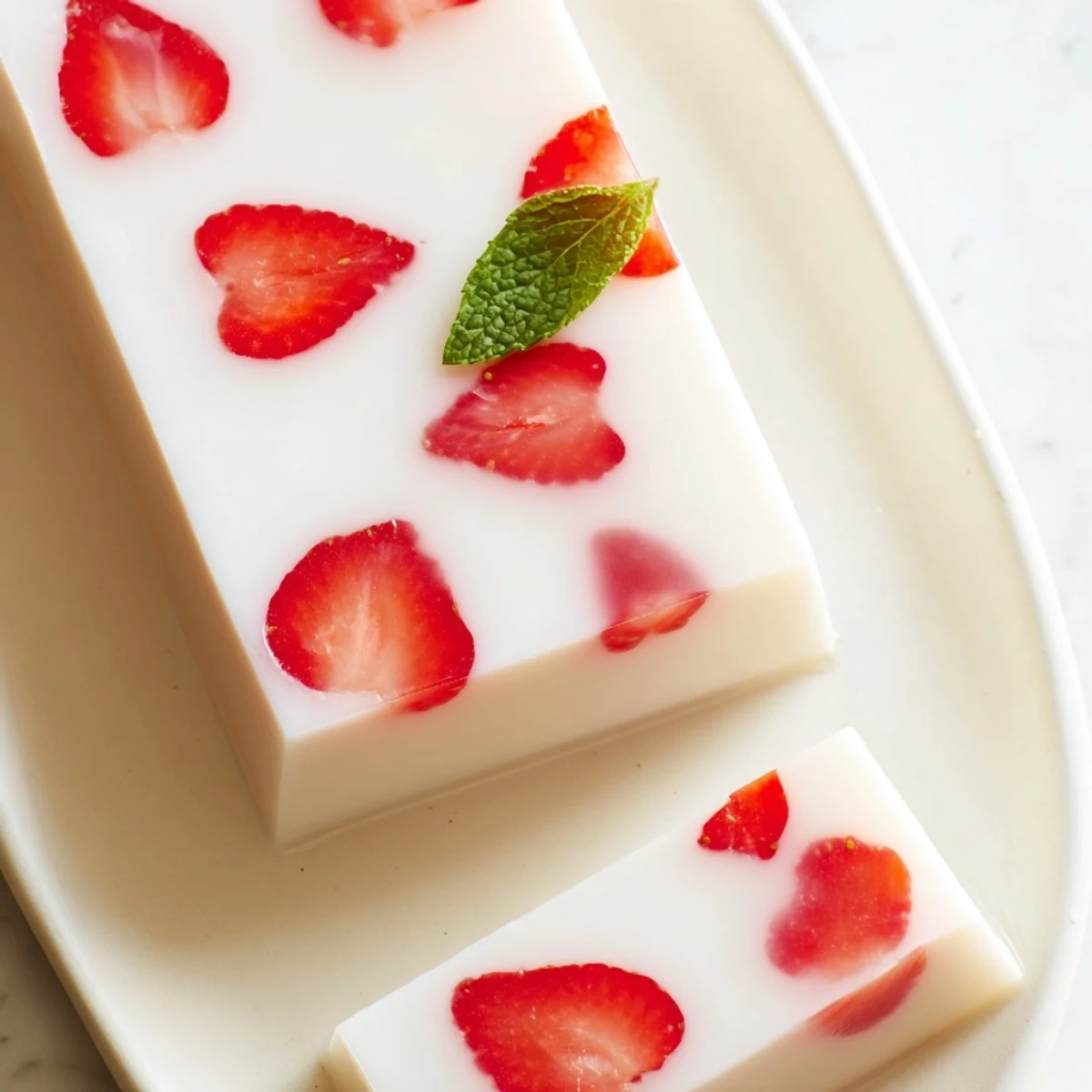
- Rinse the berries gently, remove the green hulls, and slice each one in half. Arrange them cut-side down in your mold, creating an even layer that will be visible when the yokan is sliced.
- Make the milk base:
- Combine the milk, sugar, and agar-agar in a saucepan, whisking until the powder has completely dissolved. This step is crucial because any undissolved agar will create grainy spots in your finished jelly.
- Cook and activate the agar:
- Place the saucepan over medium heat and bring to a gentle simmer while stirring constantly. Let it bubble softly for 2 minutes so the agar fully activates.
- Finish the mixture:
- Remove from heat and stir in the vanilla extract, letting the mixture cool for just a few minutes until it's slightly warm but still pourable.
- Assemble the yokan:
- Gently pour the milk mixture over the strawberries, then tap the mold against the counter to release trapped air bubbles and settle the fruit evenly.
- Chill until set:
- Let the yokan cool completely at room temperature, then refrigerate for at least 3 hours until firm.
- Serve and enjoy:
- Unmold onto a cutting board, slice into portions, and garnish with fresh mint if desired.
 Save
Save This recipe became a staple after I served it at my mother's birthday dinner, where my aunt who claims to dislike desserts had two servings. There's something about the lightness of it that appeals to people who find most sweets too heavy. Now whenever strawberries go on sale, my family asks if I'm making that wobbly white dessert again.
Choosing the Perfect Strawberries
I've learned that the most beautiful yokan comes from berries that are slightly underripe rather than fully soft. They maintain their shape during the setting process and create a striking contrast against the white jelly. If your strawberries are particularly large, consider quartering them instead of halving so each slice gets an even distribution of fruit.
Working with Agar-Agar
Unlike gelatin, agar sets at room temperature and doesn't need refrigeration to firm up, though chilling makes it more stable. The trick is whisking it thoroughly into the milk before heating, because agar clumps stubbornly once it meets liquid. I use a small sieve to sprinkle it in gradually while whisking, which prevents those stubborn lumps.
Serving Suggestions
While this dessert is lovely on its own, I sometimes serve it with a drizzle of condensed milk for extra sweetness. A cup of hojicha or green tea pairs beautifully, cutting through the richness while complementing the vanilla notes. The presentation feels most special when you use a clear glass mold.
- Unmold by running a thin knife around the edges, then dip the bottom in warm water for 10 seconds
- Clean cuts come from wiping your knife with a damp cloth between slices
- For individual portions, set the yokan in small ramekins instead of one large mold
 Save
Save There's something deeply satisfying about a dessert that transforms such simple ingredients into something that feels luxurious. This yokan has taught me that elegance doesn't require complexity.
Recipe FAQs
- → What is yokan?
-
Yokan is a traditional Japanese wagashi made by thickening a sweet liquid with agar-agar gelatin. While typically made with red bean paste, this variation uses milk for a creamy, delicate dessert that's lighter than Western puddings.
- → Can I use gelatin instead of agar-agar?
-
Agar-agar creates the authentic texture and sets firmly at room temperature. If substituting gelatin, use about 3g powdered gelatin bloomed in cold milk before heating, though the final texture will be slightly softer and more jiggly.
- → How long does the yokan keep?
-
The milk-based yokan stays fresh refrigerated for up to 2 days. Beyond this, the strawberries may release excess liquid and the texture can become watery. It's best enjoyed fresh within 24-48 hours of setting.
- → Can I make this dairy-free?
-
Yes, substitute whole milk with coconut milk for a rich tropical variation, or almond milk for a lighter version. Note that coconut milk will add a subtle coconut flavor and slightly creamier texture.
- → Why must the milk mixture cool slightly before pouring?
-
Pouring hot liquid directly onto fresh strawberries would cook them, making them mushy and losing their fresh flavor. Allowing the milk to cool for 2-3 minutes ensures the fruit remains firm and vibrant while still being warm enough to incorporate smoothly.