
 Save
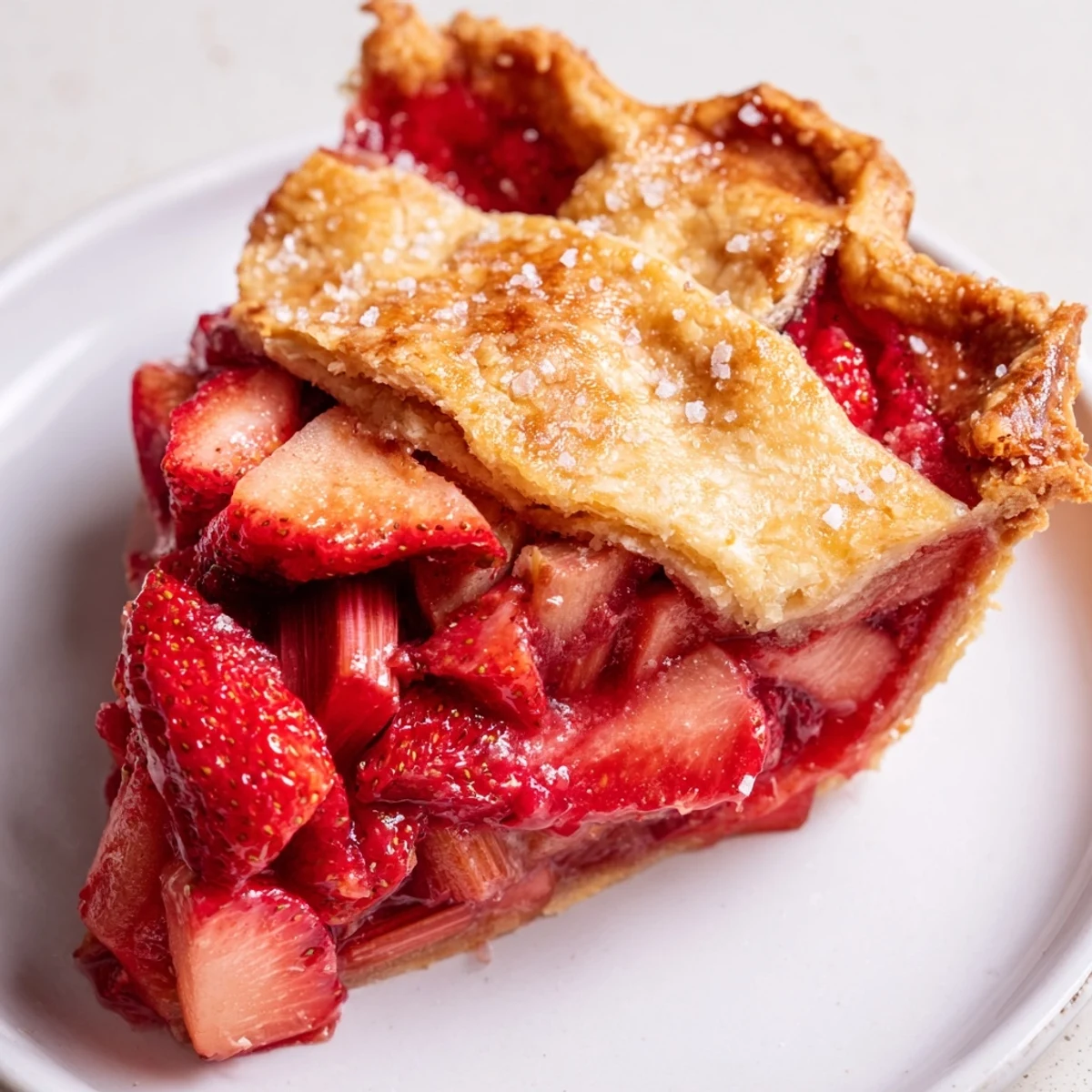
Save This classic American dessert features a balanced filling of tangy rhubarb and sweet strawberries, enhanced with vanilla and lemon juice for depth. The crust is made from cold butter and flour, rolled into disks and chilled before shaping. A distinctive lattice pattern crowns the pie, brushed with egg wash and sugar for a glossy finish. After baking until golden and bubbling, it’s cooled to set for perfect slices. Ideal for serving with vanilla ice cream or whipped cream.
The first time I made strawberry rhubarb pie, I completely misunderstood what rhubarb was. I bought it thinking it was some mysterious red celery, took a raw bite out of curiosity, and nearly puckered my mouth shut for good. My grandmother laughed and told me that rhubarb is nature's little joke, bitter as disappointment on its own but pure magic when sugar and heat get involved.
Last June I made three of these pies in one weekend for a backyard gathering. By the third one, my fingers were permanently stained pink from hulling strawberries, and I had stopped measuring the lattice strips entirely. The best moment came when my friend Sarah took her first bite, closed her eyes, and said it tasted exactly like the pie her grandmother made when she was little.
Ingredients
- 2 1/2 cups all-purpose flour: The foundation of your crust, providing structure and that tender flakiness we all want in a pie
- 1 cup unsalted butter: Cold butter is nonnegotiable here, those tiny pockets of fat melting in the oven create the layers that make pastry worth eating
- 1 tsp salt: Enhances flavor and helps strengthen the gluten structure
- 1 tbsp sugar: Just enough to give the crust a hint of sweetness without competing with the filling
- 6 to 8 tbsp ice water: The amount varies with humidity and flour, add it gradually and trust your hands
- 2 1/2 cups fresh rhubarb: Look for firm stalks with good color, avoiding ones that look tired or wilted
- 2 1/2 cups fresh strawberries: Pick berries that smell fragrant and give slightly when you press them
- 1 cup granulated sugar: This seems like a lot, but rhubarb needs serious sweetness to tame its natural acidity
- 1/4 cup cornstarch: The thickener that transforms all those fruit juices into a proper pie filling instead of soup
- 1/4 tsp salt: A pinch that wakes up all the other flavors
- 1 tsp vanilla extract: Use the good stuff if you have it, it makes a difference in something this simple
- 1 tbsp lemon juice: Brightens everything and highlights the strawberries natural sweetness
- 2 tbsp unsalted butter: Those little dots melting into the filling create pockets of rich flavor
- 1 egg: For the egg wash that gives your lattice that gorgeous golden finish
- 1 tbsp milk: Thins the egg just enough for easy brushing
- 1 tbsp coarse sugar: Optional, but adds sparkle and a satisfying crunch to the crust
Instructions
- Make the dough base:
- In a large bowl, whisk together the flour, salt, and sugar until they are evenly combined. This small step ensures your seasoning is distributed throughout every bite.
- Cut in the butter:
- Work the cold butter into the flour using a pastry cutter or your fingers until the mixture looks like coarse crumbs with some pea-sized pieces remaining. Those visible butter flakes are exactly what creates flaky layers.
- Bring it together:
- Sprinkle ice water over the mixture, one tablespoon at a time, tossing gently with a fork. Add just enough water for the dough to hold together when squeezed, then divide into two disks, wrap tightly, and refrigerate for at least one hour.
- Prep your filling:
- In a large bowl, combine the sliced rhubarb, strawberries, sugar, cornstarch, salt, vanilla, and lemon juice. Toss everything together until the fruit is evenly coated, then set aside for 15 minutes to macerate.
- Roll the bottom crust:
- On a lightly floured surface, roll out one dough disk into a 12 inch circle, rotating frequently to prevent sticking. Carefully transfer it to your 9 inch pie dish, letting the edges hang over the sides.
- Fill the pie:
- Spoon the fruit mixture into the prepared crust, pouring in all those accumulated juices too. Scatter the small pieces of butter over the filling.
- Create the lattice strips:
- Roll out the second dough disk and cut it into strips about 1 inch wide using a knife or pastry wheel. Lay half the strips parallel across the pie, spacing them evenly.
- Weave the lattice:
- Fold back every other strip, place a new strip perpendicular across, then fold the strips back over. Repeat this process, alternating which strips you fold, until you have created a woven pattern across the entire pie.
- Finish the edges:
- Trim any excess dough, then fold the overhang under itself and crimp the edges with your fingers or a fork to seal everything tightly.
- Apply the egg wash:
- Whisk the egg and milk together in a small cup, then brush this mixture over the entire lattice crust. Sprinkle with coarse sugar for that bakery finish if you like.
- Bake at high heat:
- Place the pie on a baking sheet to catch any drips, then bake at 400°F for 20 minutes to set the crust and start the cooking process.
- Finish baking:
- Reduce the oven temperature to 350°F, cover the pie loosely with foil if the crust is browning too quickly, and continue baking for 35 more minutes until the filling bubbles thickly.
- Patience is essential:
- Let the pie cool completely on a wire rack for at least 2 hours before slicing. This allows the cornstarch to fully set the filling so you get clean slices instead of a runny mess.
 Save
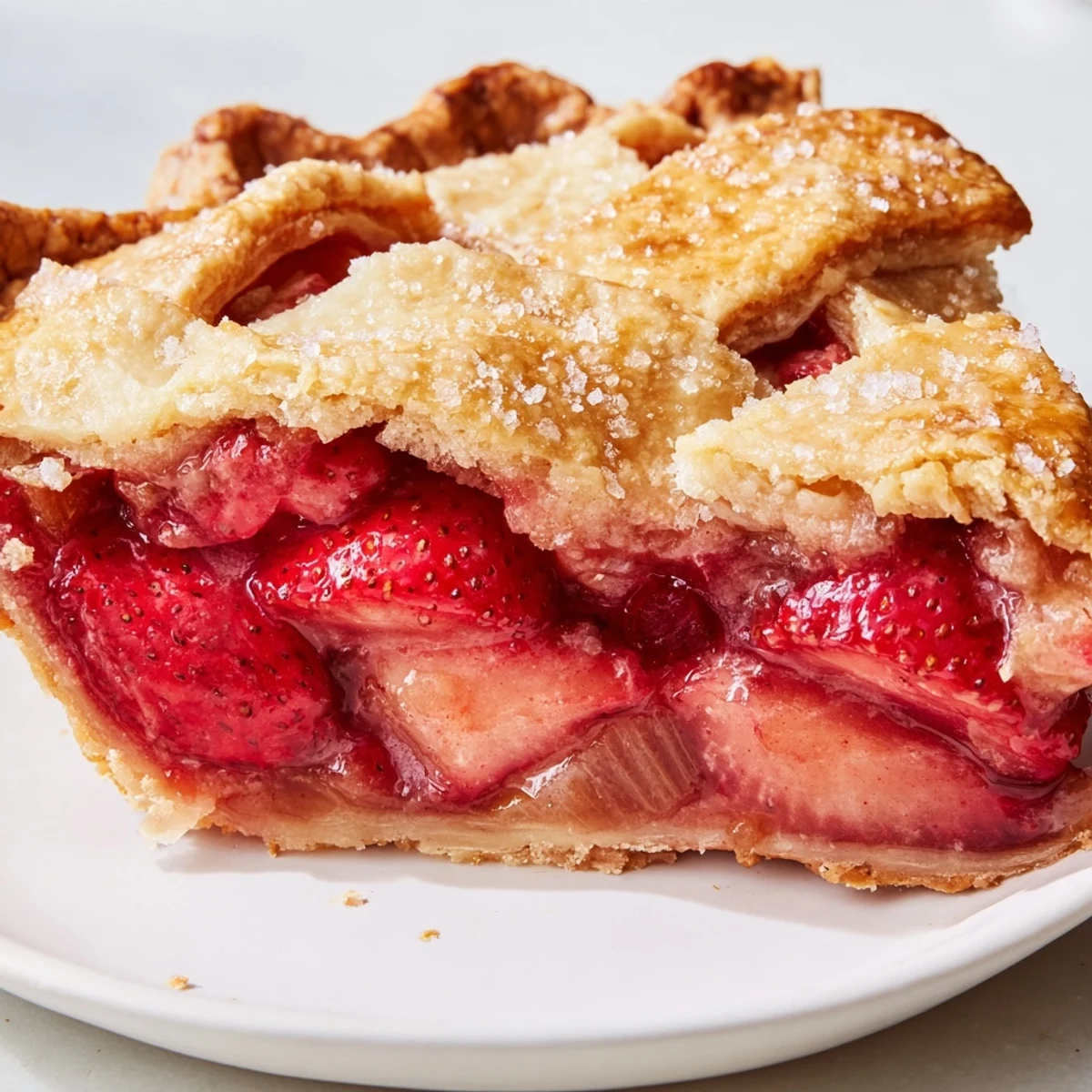
Save There is something deeply satisfying about serving a slice of this pie and watching people take that first bite, the way they pause and really taste it. The combination of fruit and butter and sugar is timeless, but the lattice top makes it feel like a special occasion even on a Tuesday.
Working With Lattice Crusts
The first few times I attempted a lattice, I treated it like a geometry problem and ended up with frustrated tears and torn dough. Then someone told me to just relax and weave it like I was making a basket out of grass as a kid. The strips do not need to be perfectly uniform, and small gaps are actually fine because the filling puffs up as it bakes.
Seasonal Fruit Swaps
Through the years I have learned that this formula works with almost any fruit combination, as long as you respect the balance between sweet and tart. Peach and raspberry in July, apple and cranberry in November, each version tells a slightly different story but the structure remains the same.
Make Ahead Wisdom
Pie demands a certain kind of planning that fits perfectly into a slow weekend morning. I like to make the dough the night before and let it rest in the refrigerator, which relaxes the gluten and makes rolling infinitely easier. The filling can be prepped and waiting in a bowl, covered and chilling, so when you are ready to assemble everything moves quickly.
- Freeze the assembled pie unbaked for up to a month, adding 15 minutes to the baking time
- Baked pie keeps well at room temperature for 2 days, though the crust will soften slightly
- Individual slices reheat beautifully in a 350°F oven for about 10 minutes
 Save
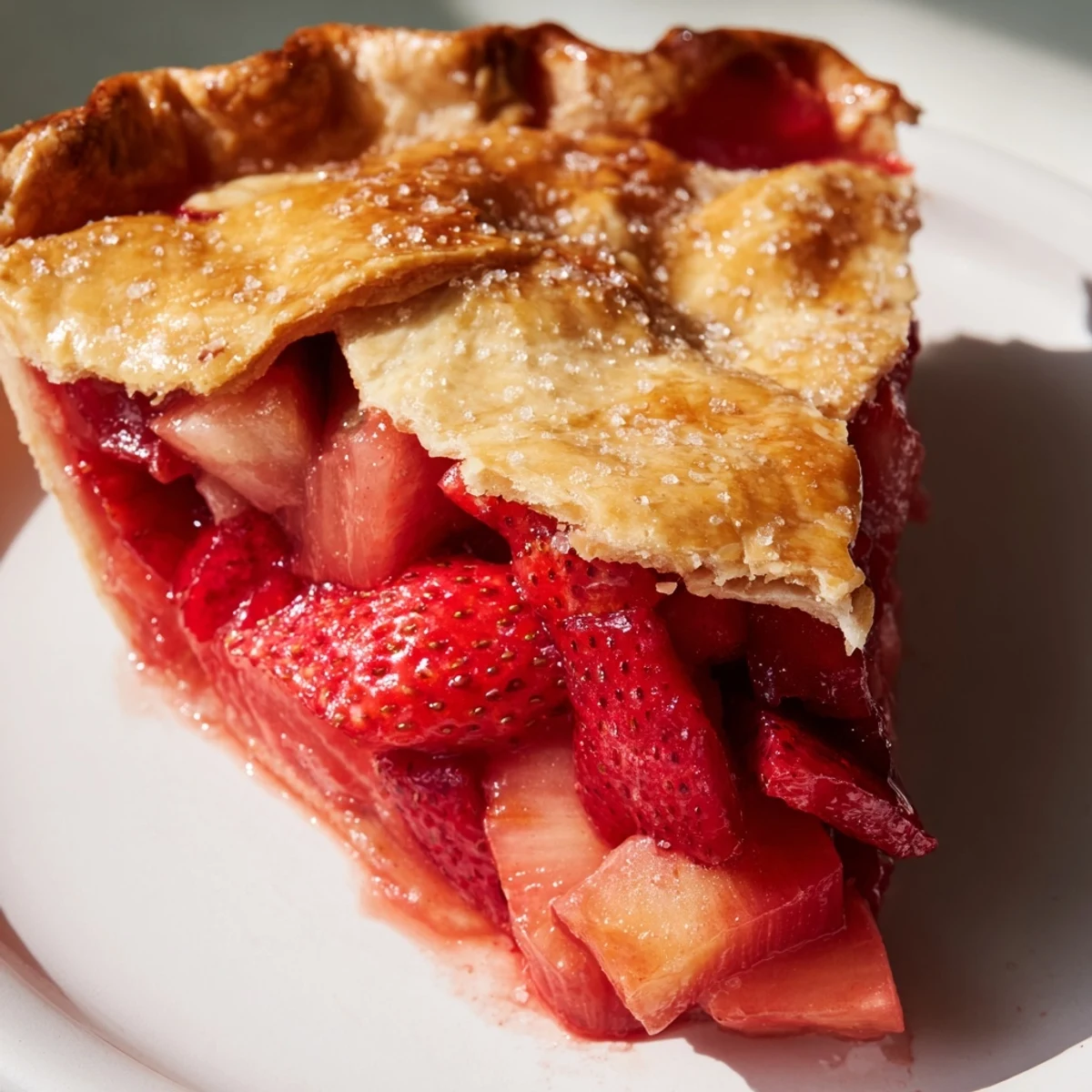
Save Perfect pie is about embracing the imperfections, the juice that bubbles over, the slight wobble in your lattice pattern. There is no dessert that says home quite like this one.
Recipe FAQs
- → How do you achieve a flaky crust?
-
Use cold cubed butter and minimal water when mixing the dough. Handle the dough lightly and chill before rolling to maintain flakiness.
- → What is the purpose of the lattice crust?
-
The lattice top allows steam to escape while baking and adds an appealing texture and visual element to the pie.
- → Can frozen strawberries and rhubarb be used?
-
Yes, but thaw and drain them well to reduce excess moisture and avoid a soggy crust.
- → Why add cornstarch to the filling?
-
Cornstarch acts as a thickening agent, helping the fruit juices set into a cohesive filling as the pie bakes.
- → How long should the pie cool before slicing?
-
Let the pie cool completely for at least 2 hours to allow the filling to set properly and prevent runny slices.
- → What variations can enhance the flavor?
-
Substituting half the strawberries with raspberries adds depth, and serving with vanilla ice cream complements the tartness nicely.